Sonair
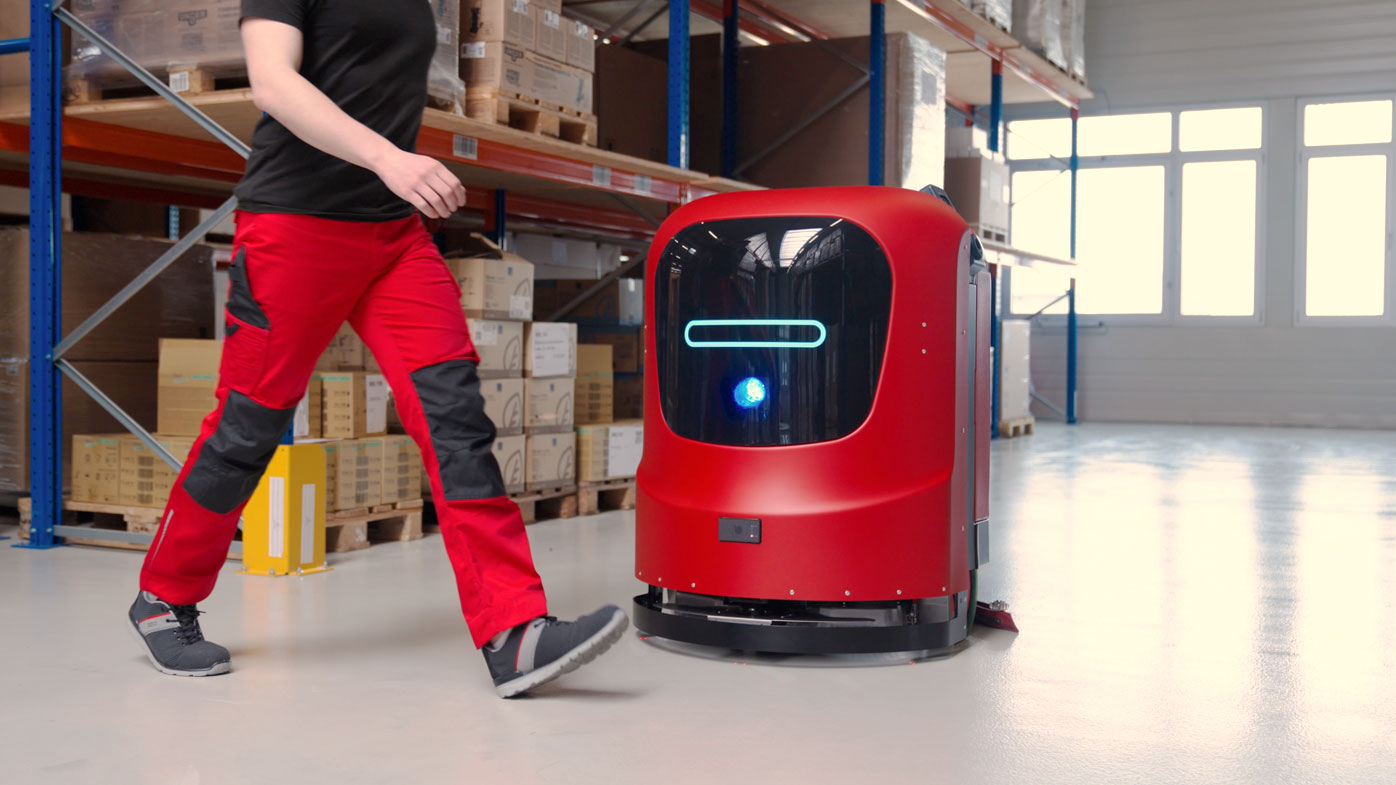
Cleanfix needed more perception capabilities for its cleaning AMRs. Sonair's ADAR ultrasonic sensor provided just that.
Get news, papers, media and research delivered. Sign up for our free newsletters.
Stay up-to-date with news and resources you need to do your job. Research industry trends, compare companies and get weekly market intelligence with Robotics 24/7.
Sonair
Cleanfix needed more perception capabilities for its cleaning AMRs. Sonair's ADAR ultrasonic sensor provided just that.
Professional cleaning has become a proving ground for autonomous robots.
Schools, hospitals, warehouses, transport hubs, commercial buildings; these are dynamic, shared spaces where people move, conditions change, and low-lying obstacles can interrupt a robot's mission at any moment.
“This is where autonomous cleaning actually takes place,” explains Roger Kaiser, head of robotics at Cleanfix, a professional cleaning technology company.
Autonomous cleaning robots must detect obstacles reliably while covering large areas efficiently. The challenge is that dust, moisture, reflective surfaces, and low light are common in professional cleaning environments. These are factors that strain traditional optical sensing systems.
"We were looking for a perception approach that remains stable under exactly these conditions," Kaiser says. "Camera-based systems reach their limits in dusty, reflective, or low-light environments."
For its new RA660 Navi XL, Cleanfix wanted an approach to robot perception that could support predictable autonomous behavior across long operating periods. They chose Sonair's ADAR (Acoustic Detection and Ranging) 3D ultrasonic sensor.
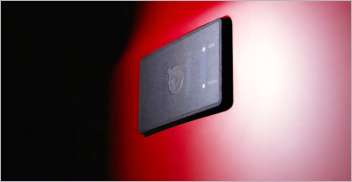
ADAR uses ultrasonic waves and electronic beamforming to capture the surrounding space in three dimensions. Unlike conventional ultrasonic sensors, which provide limited, single-pane directional information, ADAR is designed to create 3D spatial awareness with a wide field of view.
For the RA660 Navi XL, this means richer 3D awareness with fewer individual sensors, supporting cleaner integration and more predictable autonomous behavior.
This gives the RA660 Navi XL an additional mode of perception: the ability to use sound to detect people, objects, and the low-profile, partially obscured obstacles that cleaning environments are littered with. It also allowed Cleanfix to simplify the robot's overall sensor architecture considerably, something Kaiser discusses in detail in the case study.
ADAR's design and capabilities earned it the Best Product Award at LogiMAT in March 2026.
Robotics perception is often described in visual terms: seeing, mapping, imaging, and recognizing. ADAR adds something different: a way for robots to listen to the space around them.
For Kaiser and the Cleanfix team, this shift in approach had implications beyond sensor count and specification sheets. It ultimately came down to behavior: whether a robot could be trusted to operate smoothly, day after day, across many sites and floor plans, with minimal interruption.
"What matters in practice is predictable behavior and minimal interruptions over long operating periods," Kaiser said. "This is where autonomous cleaning succeeds or fails."
Whether ADAR delivers on that promise and what Cleanfix learned along the way is the subject of the full case study.
GENISOM AI makes ICRA debut at conference in Vienna
World's first omni-modal evaluation including tactile sensing for…
Ultrasonic sensing enhances robotics perception
North America’s largest automation and robotics event takes place June 22-25